 Silicone Manufacturer for Custom Silicone Products
Payment Terms and Tooling Amortization in Business to Business Injection Molding: Negotiating Your Manufacturing Contract
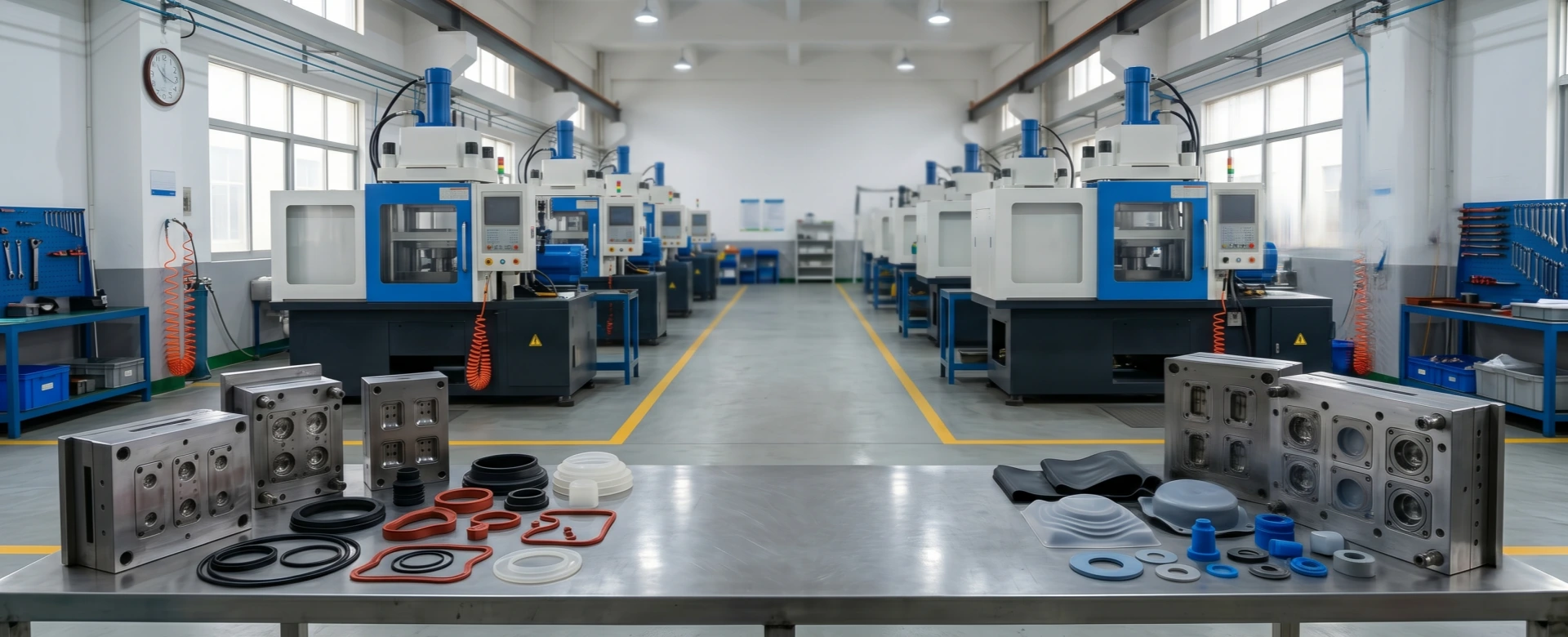
In the Business to Business industrial procurement sector, transitioning a custom Liquid Silicone Rubber component from digital engineering to mass production requires a massive upfront financial commitment. The high-tensile steel injection mold represents a profound Capital Expenditure, frequently ranging from ten thousand to over one hundred thousand dollars depending on the cavity layout and hot-runner complexity. For an Original Equipment Manufacturer, absorbing this severe cash flow impact prior to generating any retail revenue is a critical financial bottleneck.
To navigate this liquidity crisis, procurement directors must master the commercial mechanics of tooling payment terms and mathematical amortization. A poorly negotiated manufacturing contract can result in trapped capital, loss of intellectual property ownership, and punitive financing premiums hidden within the piece price. This technical specification deconstructs the standard milestones of tooling invoices, the economic formulas driving amortized unit costs, and the catastrophic legal risks associated with factory-financed steel assets.
Commercial Finance Axiom: In global manufacturing, there is no such economic reality as “free tooling.” If a factory offers to build your steel injection mold at zero upfront cost, you are entering an aggressive financing agreement where the capital expenditure is heavily subsidized by an inflated per-unit piece price and the forfeiture of your physical asset ownership rights.
1. Standard Capital Expenditure Milestones
When an Original Equipment Manufacturer elects to fund the tooling upfront, they secure absolute legal ownership of the mold and guarantee the lowest possible baseline piece price. However, legitimate manufacturers rarely demand one hundred percent of the payment upon signing. To mitigate risk for the buyer while protecting the factory’s engineering labor, payments are structured across three unyielding physical milestones:
- Fifty Percent Tooling Initiation: Paid immediately upon the issuance of the official Purchase Order. This capital physically purchases the raw aerospace aluminum or P20 steel blocks and funds the initial five-axis Computer Numerical Control milling operations.
- Thirty Percent First Tooling Sample: Invoiced only after the factory extracts the very first physical prototypes from the heated press and ships them to the Original Equipment Manufacturer for dimensional validation.
- Twenty Percent Final Commercial Approval: Disbursed only after the component passes exhaustive tolerance audits and the factory secures the official Production Part Approval Process sign-off, authorizing continuous mass manufacturing.
2. The Mathematics of Tooling Amortization
For startups or enterprise divisions seeking to protect their Operational Expenditure budgets, tooling amortization allows the Original Equipment Manufacturer to spread the cost of the steel mold across the production volume. In this scenario, the factory utilizes its own capital to build the mold, subsequently recuperating the investment by adding a financing premium to every individual part sold. The amortized piece price is calculated using the following rigid formula:
If a fifty-thousand-dollar mold is amortized over a binding Minimum Volume Commitment of five hundred thousand units, the absolute mathematical minimum added to each part is ten cents. However, factories act as high-risk commercial lenders in this scenario. If the Original Equipment Manufacturer’s product fails in the retail market and they only order fifty thousand units, the factory faces a massive unrecouped financial loss. Consequently, factories invariably apply a strict Factory Financing Premium (often twenty to forty percent compounding interest) on top of the raw tooling cost to offset their catastrophic market risk.
3. The Golden Handcuffs: Intellectual Property and Ownership Traps
The most dangerous legal vulnerability in an amortization contract involves physical asset custody. If the Original Equipment Manufacturer pays for the tooling upfront, they possess unencumbered legal title to the mold and can demand its physical extraction to a competing facility at any time. Conversely, under a fully amortized agreement, the factory retains absolute legal ownership of the injection mold until the final unit of the Minimum Volume Commitment is invoiced and paid.
This creates a phenomenon known as the “Golden Handcuffs.” If the factory suddenly degrades product quality, drastically increases the baseline piece price, or delays critical shipments, the Original Equipment Manufacturer is legally paralyzed. They cannot legally extract the tool because they do not own it, nor can they transition to a new supplier without breaching the commercial contract and triggering massive financial liquidation penalties. Elite procurement teams must strictly ensure that any amortization contract includes a “Buy-Out Clause,” allowing the buyer to pay the remaining unamortized tooling balance in a single lump sum to instantly force the transfer of asset ownership.
4. Sourcing Financial Architecture Comparison
| Financial Variable | Upfront Capital Expenditure | Fully Amortized Tooling Financing |
|---|---|---|
| Unit Piece Price | Absolute lowest baseline manufacturing cost. | Heavily inflated by capital division and risk premiums. |
| Initial Cash Flow Impact | Severe liquidity drain prior to any retail revenue. | Zero upfront cost; protects operational cash flow completely. |
| Physical Asset Ownership | Immediate and unencumbered legal title to the mold. | Factory owns the asset until the final volume commitment is met. |
| Supply Chain Agility | Maximum agility; can transfer tool to secondary suppliers instantly. | Locked into the initial factory via severe contractual penalties. |
Negotiate Secure Financial Frameworks with Reemane Strategic Sourcing
Protect your cash flow, eradicate hidden financing premiums, and secure absolute legal custody over your intellectual property assets. Reemane provides transparent Capital Expenditure invoicing, highly flexible partial amortization schedules, and explicit ownership transfer clauses. To coordinate a confidential financial procurement review, contact our commercial contract desk at sales@siliconefactories.com or inspect our secure manufacturing infrastructure at www.siliconefactories.com.