 Silicone Manufacturer for Custom Silicone Products
Supplier Quality Audits for Silicone Factories: A Checklist for Remote Video and Live Plant Inspections
In the global procurement of mission-critical elastomeric components, conducting rigorous Supplier Quality Audits is the ultimate defense against catastrophic supply chain failures. However, many Original Equipment Manufacturers execute superficial facility tours that merely evaluate factory cleanliness and basic organizational charts. When sourcing Platinum Cured Liquid Silicone Rubber for medical fluid management or automotive environmental sealing, a basic visual inspection is severely inadequate. The audit must forensically interrogate the factory’s mathematical process controls, chemical traceability architecture, and high-tensile steel tooling vault.
Whether navigating travel restrictions via high-definition remote video audits or executing boots-on-the-ground live plant inspections, procurement engineers must deploy a targeted, metrology-driven checklist. This technical specification deconstructs the exact engineering artifacts, thermodynamic documentation, and International Organization for Standardization compliance matrices required to validate a legitimate, utility-grade silicone manufacturing facility.
Supplier Compliance Axiom: A pristine epoxy floor and brightly lit assembly lines do not guarantee defect-free manufacturing. True quality is invisible to the naked eye; it is hidden within the calibration logs of the optical comparators, the temperature graphs of the vulcanization presses, and the cryptographic security of the engineering servers.
1. Raw Material Traceability and Cold Storage Metrology
Unlike rigid thermoplastics, unvulcanized Liquid Silicone Rubber is highly sensitive to ambient temperature and possesses a strict shelf life. If raw material is improperly stored, premature chemical cross-linking occurs, devastating the final physical properties of the molded seal. During an audit, inspectors must bypass the front office and demand immediate access to the raw material warehouse.
The auditor must visually or digitally verify the presence of active climate-controlled cold storage units maintaining temperatures strictly below twenty degrees Celsius. Furthermore, the factory must demonstrate a flawless First In First Out inventory rotation protocol. The auditor should randomly select a finished silicone component from the shipping dock and challenge the Quality Assurance manager to trace it backwards. A compliant facility will instantly produce the corresponding compounding batch record and the original Certificate of Analysis from the chemical manufacturer, proving absolute, unbroken traceability from the ocean-freight container to the final retail packaging.
2. Tooling Vault and Computer Numerical Control Machining Validation
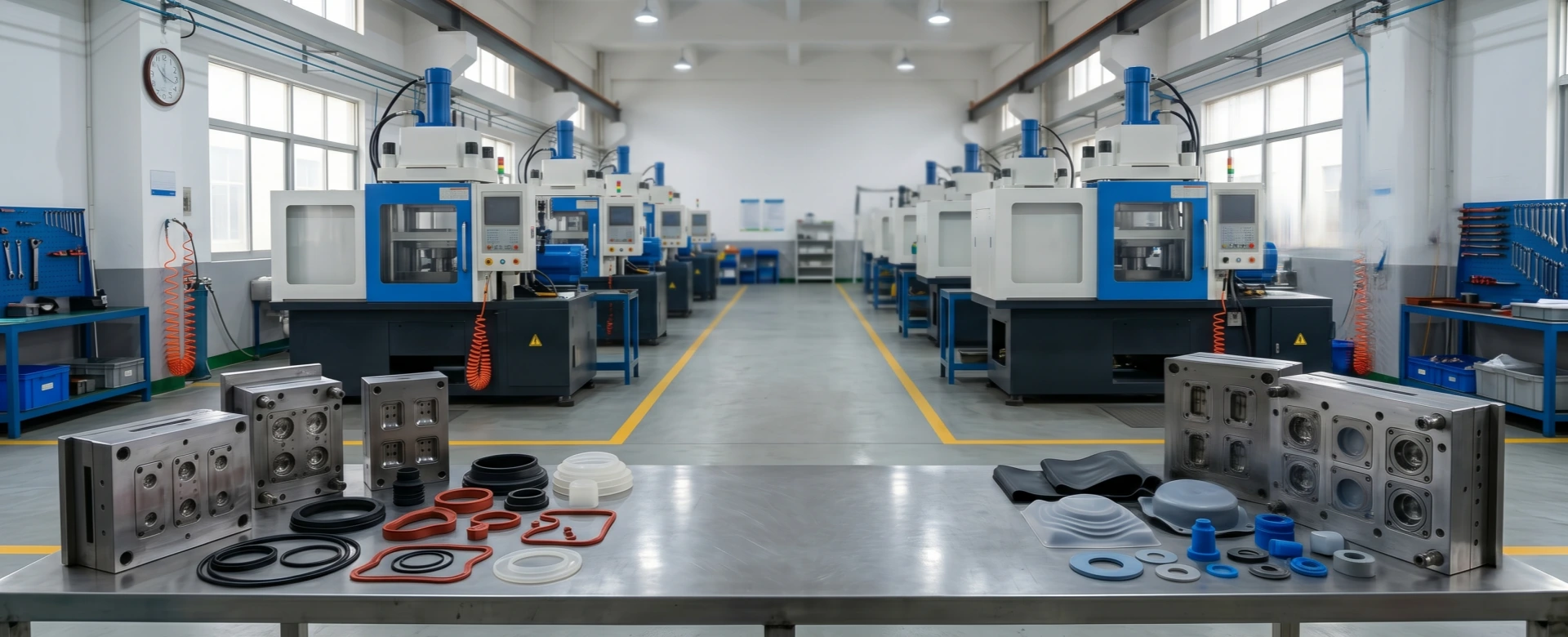
The precision of a molded silicone gasket is entirely dictated by the microscopic tolerances of its containment vessel. Auditors must closely inspect the factory’s tooling infrastructure. For live inspections, the auditor must enter the Tooling Vault. High-tensile steel molds (such as H13 or P20 grade steel) must never be stored on the open production floor. They must be housed in a climate-controlled vault with relative atmospheric humidity strictly locked below forty percent to prevent microscopic surface oxidation.
The factory must also present their in-house Computer Numerical Control milling capabilities or document their explicit sub-contractor metrology protocols. The auditor should request the maintenance log for a random active mold. This log must detail the exact frequency of ultrasonic alkaline cleaning, the application of Military Specification anti-corrosion inhibiting compounds, and the historical records of any dimensional shim adjustments required to compensate for multi-million-cycle mechanical wear.
3. Vulcanization Thermodynamics and Process Capability
The core of silicone manufacturing occurs inside the heated hydraulic press. A superficial audit notes that the machines are operational; an engineering audit interrogates the thermodynamics. The auditor must demand real-time access to the Statistical Process Control interface of an active injection molding press.
The factory must mathematically prove that the upper and lower platens of the press maintain uniform thermal distribution, typically oscillating between one hundred and seventy degrees Celsius and two hundred degrees Celsius, with a variance of no more than plus or minus two degrees. Additionally, the auditor must verify the functionality of the vacuum degassing chambers. Silicone injection requires absolute atmospheric evacuation prior to the injection phase to prevent trapped air voids. The auditor should inspect the digital vacuum sensors to ensure they are interlocked with the injection cycle, guaranteeing that the machine will automatically halt if the requisite negative pressure is not achieved.
4. Audit Execution Matrix: Remote Video versus Live Plant Inspection
| Inspection Parameter | Remote Video Audit Capability | Live Plant Audit Capability |
|---|---|---|
| Documentary Traceability | Excellent (Screen-sharing of Enterprise Resource Planning systems and Certificates of Analysis). | Excellent (Physical review of binder logs and signed routing sheets). |
| Thermodynamic Validation | Moderate (Camera pointed at digital machine interfaces; requires high trust). | Absolute (Auditor can physically verify secondary calibration thermocouples). |
| Tooling Surface Integrity | Poor (Webcams cannot accurately capture microscopic steel oxidation or pitting). | Absolute (Auditor can physically inspect optical cavity finishes and parting lines). |
| Cleanroom Particulate Testing | Poor (Requires trusting the factory’s self-reported laser particle counter data). | Absolute (Auditor can witness active atmospheric sampling and gowning protocols). |
Execute Rigorous Factory Audits with Reemane Compliance Infrastructure
Demand absolute metrology, ensure uncompromised chemical traceability, and validate your manufacturing supply chain with mathematical certainty. Reemane operates under the strictest International Organization for Standardization and International Automotive Task Force frameworks, offering completely transparent remote video portals and welcoming exhaustive live engineering audits. To schedule a comprehensive Supplier Quality Audit of our precision manufacturing facility, contact our compliance engineering desk at sales@siliconefactories.com or inspect our audit protocols at www.siliconefactories.com.