 Silicone Manufacturer for Custom Silicone Products
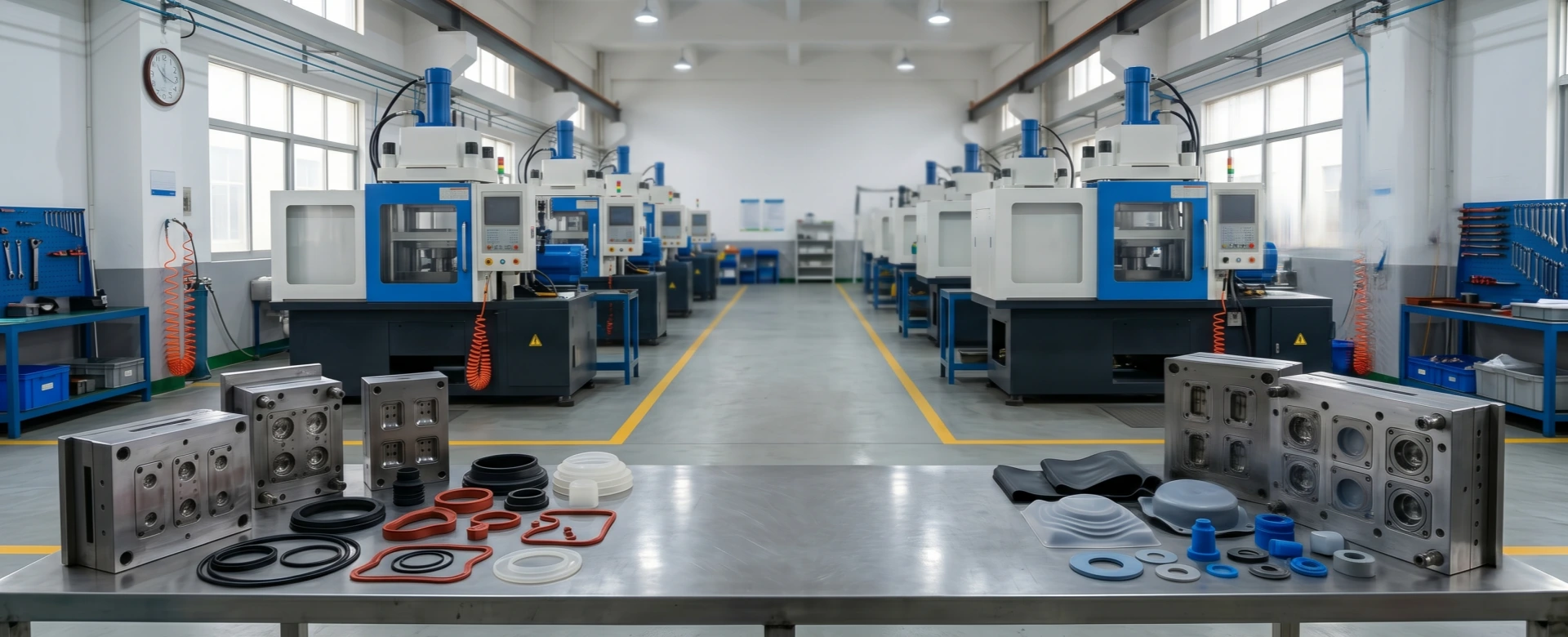
Scaling Smoothly: Transitioning from Local Low-Volume Prototyping to Overseas High-Volume Production Houses
In the product development lifecycle of premium medical devices and high-end automotive assemblies, Original Equipment Manufacturers execute a dual-phase procurement strategy. To achieve immediate dimensional validation and rapid physical iteration, engineers utilize local, domestic manufacturing facilities to produce low-volume silicone prototypes. However, to survive extreme global market competition, the program must inevitably transition to an overseas mass-production facility to mathematically crush the per-unit commercial cost. This transition is frequently a catastrophic failure point.
A perilous and widely held engineering fallacy is the assumption that if a local factory successfully injects five hundred functional parts from an aluminum prototype mold, an overseas factory can effortlessly inject five million parts using the same digital blueprints. This completely ignores the severe physical realities of macromolecular rheology, thermodynamic mass, and multi-cavity tool balancing. This technical specification deconstructs the rigorous Technology Transfer protocols required to cross the manufacturing chasm, preventing dimensional deviations, supply chain paralysis, and extreme capital expenditure losses during the overseas transition.
Manufacturing Scale Axiom: Prototyping is the art of achieving geometrical perfection once. High-volume mass production is the industrial science of mathematically preventing geometric imperfection millions of times in a row. They are fundamentally different engineering disciplines requiring completely different thermodynamic tooling architectures.
1. The Thermodynamic and Rheological Shift
When an Original Equipment Manufacturer transitions from a local single-cavity prototype mold to an overseas sixty-four-cavity production mold, the physics of the Liquid Silicone Rubber entirely mutate. In a local prototype tool, the highly viscous, unvulcanized silicone travels a minuscule distance from the injection nozzle directly into the cavity. The thermal mass of the small, aerospace-grade aluminum mold is extremely responsive and easy to stabilize.
Conversely, a massive overseas production tool—weighing over one thousand kilograms and milled from high-tensile tool steel—presents a monumental thermodynamic challenge. The Liquid Silicone Rubber must navigate a complex, multi-tiered cold-runner system before entering the sixty-four individual heated cavities. As the fluid travels through these extensive steel channels, it encounters severe shear thinning, fundamentally altering its kinetic viscosity. If the overseas engineering team does not execute advanced mold-flow rheological simulations, the cavities closest to the injection gate will suffer from thermal over-curing (scorching), while the peripheral cavities will experience incomplete cross-linking (short shots).
2. The Comprehensive Technology Transfer Package
To prevent months of wasted trial-and-error at the overseas facility, the Original Equipment Manufacturer must mandate a rigorous, documented Technology Transfer. Simply emailing a Three-Dimensional Computer-Aided Design file is industrial negligence. A legitimate overseas scaling protocol requires a highly detailed dossier extracted from the local prototyping phase.
This package must physically include the specific platinum-catalyzed silicone formulation data, the calculated volumetric thermal shrinkage rates (typically two to three percent, but highly dependent on local press dynamics), and the exact durometer (Shore A hardness) target. More critically, the transfer must include the baseline metrology data. The local facility must provide the Coordinate Measuring Machine dimensional inspection reports from their approved batch. This provides the overseas metrology laboratory with an absolute mathematical baseline, allowing them to calibrate their Statistical Process Control software to match the exact interference fits validated by the original domestic engineers.
3. Production Part Approval Process and Metrology Synchronization
Because the overseas high-tensile steel tool will possess different draft angles, varied gate locations, and separate vacuum venting architectures compared to the local prototype tool, the final molded component will inevitably exhibit microscopic deviations. To guarantee that these deviations do not compromise the macro-assembly of the product, the overseas facility must execute a rigid Production Part Approval Process.
Before any commercial shipping containers are authorized, the overseas manufacturer must submit a completely new Master Control Plan. This involves extracting fifty random samples from the new multi-cavity tool and performing a rigorous Gauge Repeatability and Reproducibility study. Only when the Process Capability Index proves that the high-volume overseas tool can replicate the dimensional perfection of the local prototype tool—with mathematically zero chance of creating an out-of-tolerance defect—is the transition officially and securely finalized.
4. Sourcing Phase Comparison: Prototype versus Mass Production
| Manufacturing Variable | Local Low-Volume Prototyping | Overseas High-Volume Production |
|---|---|---|
| Tooling Substrate Material | Aerospace-grade aluminum (Optimized for rapid Computer Numerical Control milling). | High-tensile tool steel (Optimized for millions of mechanical clamping cycles). |
| Cavity Layout and Rheology | Single or dual cavity; simplistic fluid travel path. | High-cavitation; extreme shear thinning and complex cold-runner balancing. |
| Unit Cost Economics | Maximum piece price due to slow, manual extraction and unamortized labor. | Absolute minimum piece price; automated extraction drastically dilutes machine cost. |
| Validation Framework | Ad-hoc engineering adjustments and manual part sorting. | Rigid Statistical Process Control and mandatory Production Part Approval Process. |
Execute a Flawless Production Transition with Reemane Scaling Infrastructure
Eradicate supply chain delays, mathematically conquer complex rheological balancing, and secure absolute dimensional synchronization from prototype to mass production. Reemane provides exhaustive Technology Transfer auditing, completely automated high-cavitation steel tooling, and fully certified International Organization for Standardization quality handoffs. To coordinate a secure scaling transition for your approved prototypes, contact our manufacturing integration desk at sales@siliconefactories.com or inspect our high-volume automated lines at www.siliconefactories.com.