 Silicone Manufacturer for Custom Silicone Products
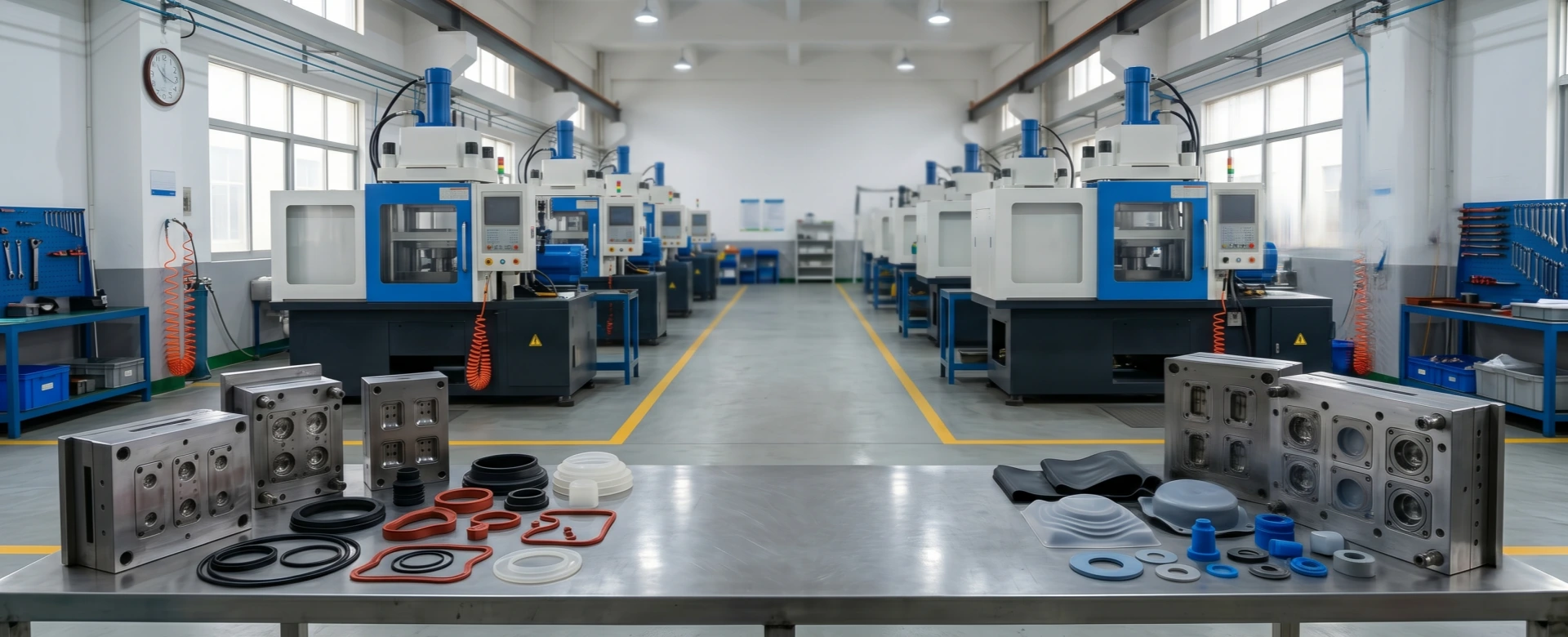
Business to Business Manufacturing: How Estimated Annual Usage and Cavity Layout Drive Down Unit Costs
In the Business to Business industrial sector, particularly within precision Liquid Silicone Rubber injection molding, procurement teams frequently encounter tiered pricing structures. A common fallacy among Original Equipment Manufacturers is the assumption that tiered pricing represents a purely commercial volume discount or an erosion of factory profit margins. In strict manufacturing economics, this is entirely false. The descending unit price is a direct, unavoidable mathematical reflection of physical machine depreciation, engineering labor amortization, and capital expenditure dilution.
When a procurement engineer receives a quotation showing a unit price of two dollars and fifty cents for one thousand units, versus forty-five cents for fifty thousand units, they are observing the mechanical shift in how Estimated Annual Usage and the physical tool cavity layout dilute uncompromising fixed costs. To engineer an optimized supply chain and maximize the Return on Investment, enterprise procurement teams must fundamentally understand how thermal calibration setup burdens and multi-cavity injection efficiencies dictate the absolute floor of polymer component pricing.
Procurement Economics Axiom: In custom polymer manufacturing, you are rarely paying primarily for the raw chemical material. The dominant cost driver is the monopolization of hydro-mechanical clamping force and precise thermodynamic vulcanization time. Scaling production is the act of mathematically crushing these fixed temporal costs.
1. The Power of Estimated Annual Usage (Amortizing Setup Costs)
Every time a factory initiates a production run, a massive industrial injection press must be comprehensively prepared. This sequence requires overhead cranes to install a solid steel mold block (often exceeding five hundred kilograms), followed by an intense thermal calibration process to heat the tooling to strict vulcanization temperatures (typically stabilized between one hundred and seventy degrees Celsius and two hundred degrees Celsius). Concurrently, the hydraulic injection barrel must be purged of previous material to guarantee International Organization for Standardization compliant purity.
This thermodynamic and mechanical setup protocol consumes engineering labor and machine opportunity time, creating a fixed setup cost that remains identical whether the factory injects five hundred parts or fifty thousand parts. The burden of this setup cost per unit is calculated as:
For an Original Equipment Manufacturer with a critically low Estimated Annual Usage, this heavy setup cost is divided among a fractional number of components, causing the per-unit price to artificially skyrocket. Conversely, a high Estimated Annual Usage mathematically vaporizes the setup burden, distributing the fixed engineering cost across tens of thousands of cycles until it represents mere fractions of a penny per component.
2. Cavity Layout: Multiplying Machine Efficiency
While Estimated Annual Usage dilutes the initial setup cost, the “Cavity Layout” fundamentally alters the continuous running cost. The cavity layout refers to the exact number of identical component geometries carved into the high-tensile steel mold block using five-axis Computer Numerical Control machining.
Consider a Liquid Silicone Rubber component that requires a thirty-second thermal vulcanization cycle to achieve full cross-linking. A single-cavity tool yields exactly one part every thirty seconds. An eight-cavity tool, operating under the exact same thirty-second cycle time, yields eight parts simultaneously. If the industrial injection press incurs an operational cost of sixty dollars per hour, the multi-cavity layout radically slashes the machine-hour financial burden per unit by exactly eighty-seven point five percent.
Although engineering an eight-cavity mold requires a significantly higher upfront capital expenditure due to advanced hot-runner systems and complex Computer Numerical Control milling, the massive reduction in variable machine-time cost creates a rapid financial break-even point for high-volume procurement programs.
3. Cost Compression Matrix: Single versus Multi-Cavity Architectures
| Economic Variable | Single-Cavity Tool Architecture | Four-Cavity Tool Architecture | Eight-Cavity Tool Architecture |
|---|---|---|---|
| Upfront Capital Expenditure | Lowest (Minimal steel machining) | Moderate (Requires runner balancing) | Highest (Complex runner systems) |
| Machine Time Cost per Unit | Maximum (One hundred percent burden) | Reduced by seventy-five percent | Reduced by eighty-seven point five percent |
| Optimal Estimated Annual Usage | Under five thousand units annually | Ten to fifty thousand units annually | Over one hundred thousand units annually |
Optimize Your Capital Expenditure with Reemane Industrial Economics
Identify your exact financial break-even intersection, eliminate wasted machine time, and strategically align your cavity layout with your Estimated Annual Usage. Reemane provides absolutely transparent Total Cost of Ownership modeling, automated Computer Numerical Control tooling fabrication, and certified scalable manufacturing lines. To coordinate a strict commercial procurement audit, contact our industrial economics desk at sales@siliconefactories.com or inspect our automated facility at www.siliconefactories.com.
Business to Business Manufacturing Cost Simulator
Adjust the Estimated Annual Usage and Cavity Layout to visualize mathematical cost compression.
100,000
Unit Price Cost Breakdown
Total Cost vs. Estimated Annual Usage