 Silicone Manufacturer for Custom Silicone Products
Supply Chain Resilience: Why Dual-Sourcing Silicone Components Is Critical for Fortune Five Hundred Companies
The fragility of the global manufacturing infrastructure has been repeatedly exposed by geopolitical trade tariffs, localized natural disasters, and unpredicted oceanic shipping blockades. For a Fortune Five Hundred Original Equipment Manufacturer, relying on a single supplier for a custom Liquid Silicone Rubber component represents a catastrophic single point of failure. If an isolated factory producing a two-cent silicone sealing gasket suffers a power grid collapse or a chemical raw material shortage, the entire multi-million-dollar vehicle assembly line or medical device production floor is forced into an immediate halt.
To insulate enterprise revenue streams against external macroeconomic shocks, elite procurement directors mandate a strict dual-sourcing architecture. This strategy involves qualifying two completely independent manufacturing facilities—often located in different sovereign jurisdictions—to produce the exact same elastomeric component simultaneously. This technical specification deconstructs the mathematics of supply chain risk, the physical mechanics of steel tooling redundancy, and the rigorous quality synchronization required to execute flawless dual-sourcing operations.
Supply Chain Economics Axiom: The financial capital required to engineer and validate a secondary injection mold is infinitesimally small compared to the staggering financial hemorrhage caused by a single day of halted mass production. Dual-sourcing is not an extraneous manufacturing expense; it is a mandatory corporate insurance policy.
1. The Mathematics of Supply Chain Interruption
When calculating the Return on Investment for a secondary manufacturing supplier, enterprise procurement teams must quantify their maximum financial exposure. The devastating cost of a single-sourced supply chain collapse is not merely the cost of the delayed silicone components; it is the total systemic revenue loss. The financial liability is mathematically defined as:
Because custom Liquid Silicone Rubber components require highly specific steel molds, recovering from a supplier bankruptcy or factory fire is remarkably slow. Commissioning a replacement mold and executing a completely new Production Part Approval Process routinely requires eight to twelve weeks. A Fortune Five Hundred company cannot suspend its flagship product lines for three months. A pre-validated dual-sourcing partner completely eradicates this exposure, capable of absorbing one hundred percent of the production volume overnight with zero technical friction.
2. Tooling Duplication and Asset Redundancy
True supply chain resilience requires physical hardware redundancy. It is not sufficient to simply sign a backup contract with a secondary facility; the secondary facility must physically possess its own independently machined high-tensile steel injection mold. This prevents logistical bottlenecks during crisis events, ensuring that physical production assets are completely decentralized.
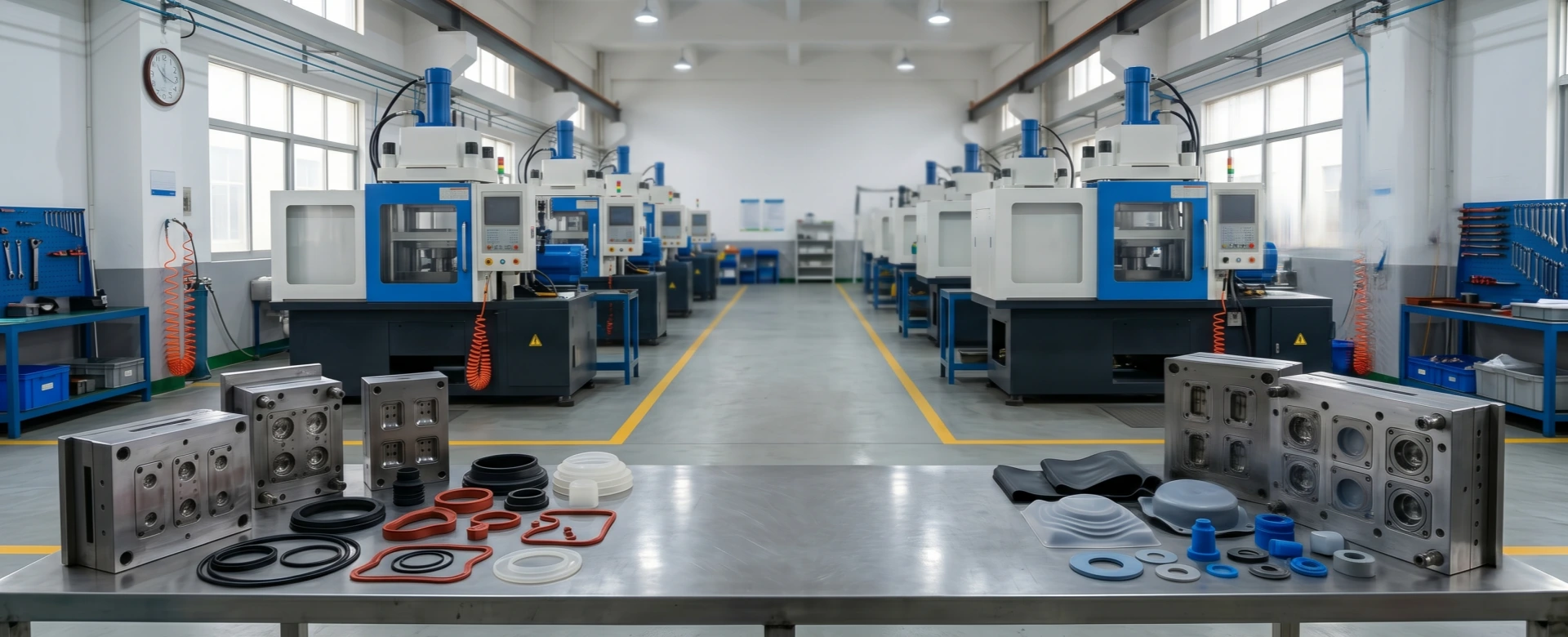
Reemane actively supports Original Equipment Manufacturers in establishing this redundancy by mirroring existing Computer Numerical Control tooling geometries. Through rigorous dimensional scanning and thermodynamic flow analysis, Reemane engineers duplicate the primary supplier’s mold architecture. This dual-tooling strategy guarantees that if the primary facility experiences a catastrophic disruption, the secondary tool located in the Reemane cleanroom facility is already hot, calibrated, and ready to inject continuous streams of flawless silicone components.
3. Production Part Approval Process Synchronization
The most profound engineering challenge in dual-sourcing is guaranteeing absolute interchangeability. A silicone valve produced by the primary supplier in North America must behave identically to a silicone valve produced by Reemane in Asia. To achieve this zero-variance synchronization, both facilities must operate under matching International Organization for Standardization quality frameworks.
Reemane executes a parallel Production Part Approval Process. This requires strict alignment of the dimensional Control Plan, the Failure Mode and Effects Analysis documentation, and the exact platinum-catalyzed raw material formulation. By running parallel Gauge Repeatability and Reproducibility metrology studies, the Original Equipment Manufacturer ensures that the statistical process bell-curve from both geographic locations perfectly overlaps, allowing assembly line robots to accept components from either factory without requiring any recalibration or sorting.
4. Risk Management Matrix: Single versus Dual-Sourced Architectures
| Risk Factor | Single-Sourced Architecture | Dual-Sourced Architecture |
|---|---|---|
| Catastrophic Line Down Risk | Critical (Total production halt upon supplier failure) | Eliminated (Instantaneous volume absorption) |
| Pricing Leverage | Weak (Supplier holds monopoly pricing power) | Strong (Competitive tension ensures fair market value) |
| Quality and Delivery Stagnation | High (Complacency due to lack of competition) | Low (Continuous benchmarking between facilities) |
| Upfront Capital Expenditure | Lowest (Only one tooling investment required) | Higher (Requires duplicate steel mold investment) |
Fortify Your Supply Chain with Reemane Strategic Manufacturing
Eradicate single points of failure, secure geographic asset redundancy, and guarantee uncompromised quality synchronization across global borders. Reemane provides rapid secondary tooling deployment, exhaustive Production Part Approval Process matching, and guaranteed raw material traceability. To initiate a confidential dual-sourcing capability review, contact our enterprise risk desk at sales@siliconefactories.com or inspect our secure manufacturing infrastructure at www.siliconefactories.com.