 Silicone Manufacturer for Custom Silicone Products
Contract Manufacturing versus Turnkey Assembly: When to Source Just the Silicone Part versus a Fully Finished Sub-Assembly
In the architecture of highly engineered medical devices, aerospace fluid connectors, and premium wearable technology, the elastomeric seal is rarely an isolated component. It must inevitably interface with rigid thermoplastic housings, stainless steel manifolds, or delicate printed circuit boards. When an Original Equipment Manufacturer orchestrates a global supply chain, they face a critical architectural decision: Should they utilize fragmented Contract Manufacturing (sourcing the raw Liquid Silicone Rubber component from one factory, the plastic housing from another, and assembling them in-house), or should they deploy a Turnkey Assembly strategy (consolidating the entire sub-assembly under a single macromolecular integration facility)?
Fragmented sourcing creates severe vulnerabilities known as tolerance stacking, where minor, acceptable dimensional deviations from separate factories combine to create a catastrophic interference failure during final assembly. Conversely, a turnkey architecture transfers the absolute liability of fit, form, and function to a single supplier. This technical specification deconstructs the physical mechanics of tolerance management, the chemical complexities of multi-substrate bonding, and the stringent International Organization for Standardization cleanroom environments required to execute flawless turnkey elastomer sub-assemblies.
Supply Chain Integration Axiom: When an elastomeric seal fails during field deployment, fragmented suppliers will inherently blame each other. The silicone manufacturer will claim the plastic housing was milled incorrectly; the plastics manufacturer will claim the silicone shrank. Turnkey integration eradicates the blame cycle by establishing a single point of absolute engineering accountability.
1. Tolerance Stacking and Dimensional Accountability
The most profound engineering risk in fragmented Contract Manufacturing is tolerance stacking. Consider a medical fluid valve where a Liquid Silicone Rubber septum must fit perfectly inside a polycarbonate cylinder. The Original Equipment Manufacturer dictates a microscopic tolerance of plus or minus zero point zero five millimeters for both components. If the silicone factory produces a septum at the maximum upper tolerance limit, and the plastics factory produces a cylinder at the minimum lower tolerance limit, both factories have successfully fulfilled their individual contractual obligations. However, when the Original Equipment Manufacturer attempts to mate them, the geometric clash causes the silicone to buckle, rendering the entire medical device useless.
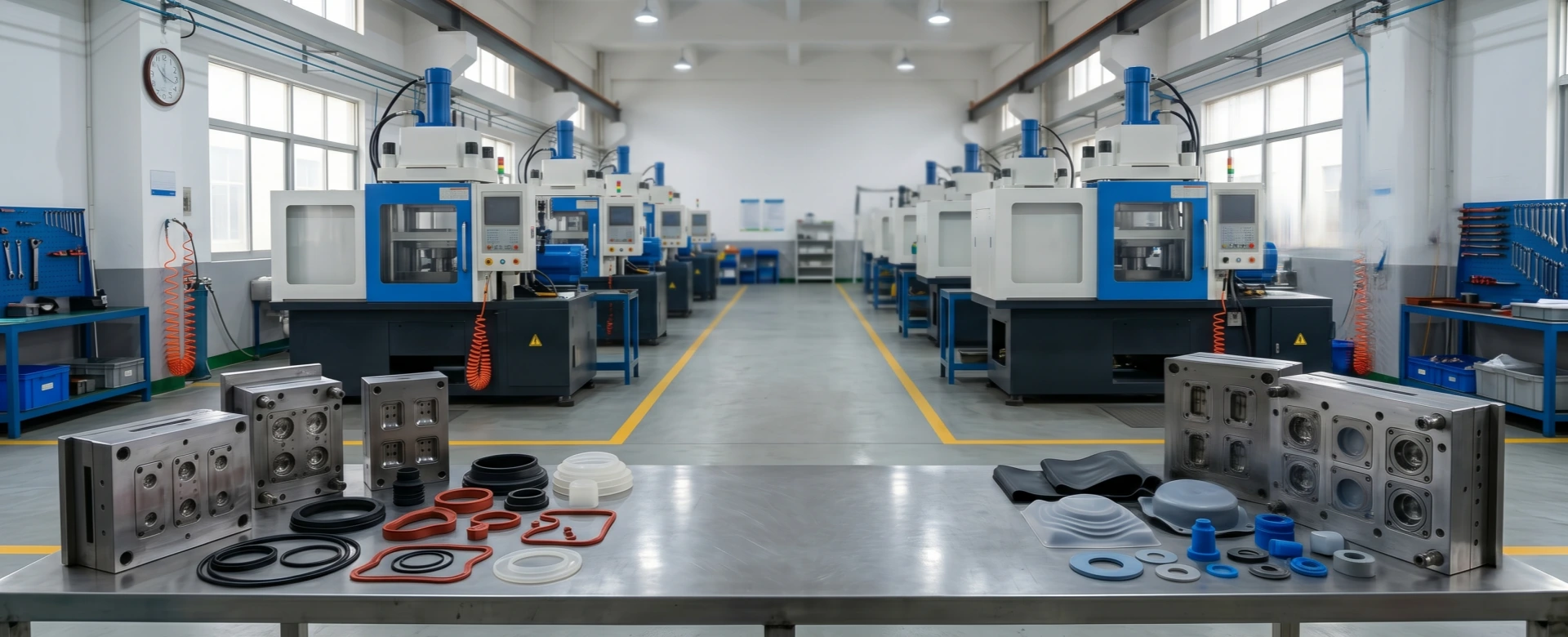
In a Turnkey Assembly environment, Reemane assumes total systemic accountability for the entire Bill of Materials. By producing both the rigid substrate and the elastomeric seal under the same roof, our metrology engineers execute dynamic Geometric Dimensioning and Tolerancing. If the plastic injection press produces a batch of housings that run slightly small, our engineers can instantly adjust the thermodynamic holding pressure on the Liquid Silicone Rubber press to shrink the corresponding silicone seals, ensuring a flawless hermetic interference fit before the components ever leave our facility.
2. Macromolecular Bonding: Overmolding versus Manual Assembly
Fragmented supply chains typically force the Original Equipment Manufacturer into manual secondary assembly, often requiring cyanoacrylate adhesives or mechanical snap-fits to marry the silicone to the plastic housing. Adhesives are messy, introduce toxic volatile organic compounds, and create severe bio-compatibility risks in medical applications. Manual assembly also introduces massive human labor costs and inconsistent application force.
A true Turnkey Assembly facility bypasses adhesives entirely by deploying multi-shot chemical overmolding. Reemane engineers inject a rigid thermoplastic substrate (such as Polyetheretherketone or Polycarbonate), immediately transfer the still-warm substrate into a secondary steel mold, and inject Platinum Cured Liquid Silicone Rubber directly over it. The heat and pressure force the siloxane polymer chains to form a permanent covalent chemical bond with the plastic substrate at a molecular level. This structural integration requires zero adhesives, achieves absolute ingress protection against pressurized fluids, and mathematically eliminates the possibility of the seal dislodging during mechanical vibration.
3. Cleanroom Assembly and International Compliance
For medical Original Equipment Manufacturers, sourcing an isolated silicone component requires the receiving facility to inspect, sterilize, and manually integrate the part into a larger device. Exposing raw silicone components to open atmospheric conditions during global transit invites microscopic particulate contamination.
Reemane solves this through vertically integrated cleanroom consolidation. Inside our International Organization for Standardization Class Eight cleanroom infrastructure, the silicone is injected, robotically extracted, and immediately mated to its corresponding hardware within seconds of vulcanization. The fully finished sub-assembly is then hermetically sealed in medical-grade Tyvek packaging. This turnkey procedure mathematically reduces the bioburden exposure time, streamlines the customer’s incoming Quality Control inspections, and drastically accelerates final regulatory clearance under the International Organization for Standardization Thirteen Thousand Four Hundred Eighty-Five medical device framework.
4. Sourcing Architecture Comparison Matrix
| Supply Chain Variable | Fragmented Contract Manufacturing | Consolidated Turnkey Assembly |
|---|---|---|
| Tolerance Stacking Risk | Severe (Independent variations cause assembly failure). | Eliminated (Single-source dynamic metrology). |
| Component Integration Method | Requires manual labor and secondary toxic adhesives. | Enables permanent covalent chemical overmolding. |
| Quality Accountability | Fragmented liability leading to multi-vendor disputes. | Absolute single-point engineering accountability. |
| Per Unit Logistics Cost | High (Paying multiple freight invoices for separate parts). | Optimized (Shipping one finalized sub-assembly). |
Consolidate Your Supply Chain with Reemane Turnkey Integration
Eradicate tolerance stacking, eliminate manual adhesive assembly, and secure absolute systemic accountability across your entire Bill of Materials. Reemane provides exhaustive multi-substrate overmolding, International Organization for Standardization Class Eight cleanroom assembly, and certified quality synchronization. To coordinate a supply chain consolidation audit, contact our system integration desk at sales@siliconefactories.com or inspect our automated assembly facility at www.siliconefactories.com.