 Silicone Manufacturer for Custom Silicone Products
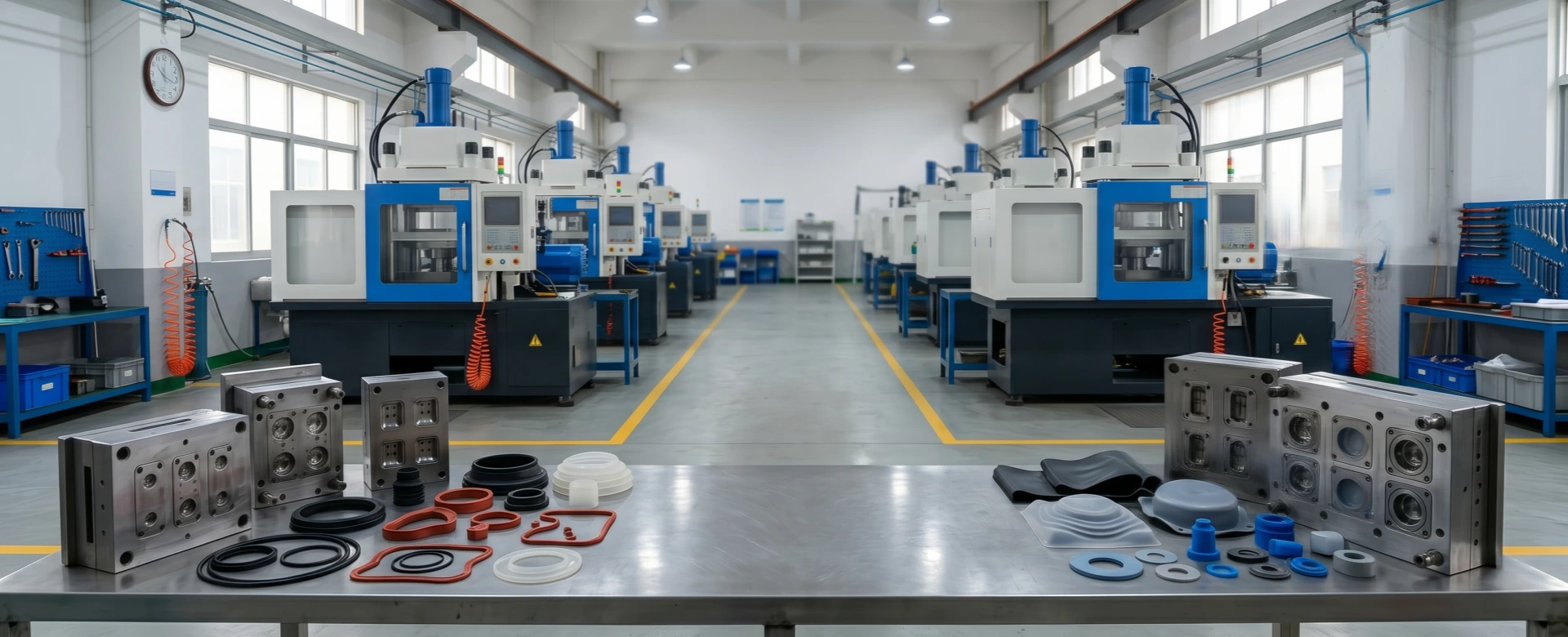
Direct answer:
Color-coded silicone seal kits help maintenance teams and assembly-line operators identify, separate, and install the correct sealing components. Different colors can represent specific equipment positions, part numbers, assembly stations, or service procedures, reducing the risk of selecting visually similar parts.
However, color should never be the only identification method. A reliable color-coded silicone seal system combines an approved color reference with a unique part number, dimensions, silicone material specification, packaging label, bill of materials, and production-lot traceability.
Industrial equipment often contains several silicone sealing components that appear nearly identical.
Two O-rings may have similar diameters but different cross-sections. Two molded gaskets may look alike but belong to different equipment revisions. Several flat silicone washers may have the same outside diameter while using different thicknesses or hardness specifications.
During equipment maintenance or repetitive assembly, these similarities can create mistakes.
An incorrect seal may fit into the available space but fail to provide the required compression, sealing contact, or long-term performance.
This is where color coded silicone seals can provide a practical advantage.
By assigning visible colors to approved seal specifications and combining them with controlled labels, manufacturers can make part selection easier and improve the consistency of maintenance kits and assembly procedures.
Reemane supports custom silicone O-rings, washers, molded gaskets, sealing profiles, and related industrial silicone parts based on drawings, physical samples, material requirements, and application conditions.
For suitable projects, we can discuss custom colors, individual part identification, separated packaging, prototype samples, and complete OEM seal kit requirements.
Color-Coded Silicone Seal Kit Workflow
Equipment Review → Seal Identification → Material Specification → Color Assignment → Sample Approval → Kit Packaging → Quality Inspection → Maintenance or Assembly
Why Color-Coded Silicone Seals Are Useful in Industrial Maintenance
Maintenance technicians may need to replace several different seals while servicing a single machine.
In some equipment, the sealing components have similar shapes but different functions or dimensions.
When replacement parts are stored together without clear identification, selecting the correct seal can become difficult.
Color coding introduces an additional visual reference.
Faster Identification During Maintenance
A defined color system can help technicians locate a required component without repeatedly comparing several similar parts.
For example, a maintenance procedure may identify a particular silicone sealing ring using both a part number and an assigned color.
The technician can use the color to find the correct compartment and then confirm the part number before installation.
Reduced Risk of Mixing Similar Components
When several silicone seals are stored in one maintenance area, visual separation can help reduce unintended mixing.
This is particularly useful when different seals have:
- Similar outside diameters
- Different cross-section dimensions
- Different Shore A hardness requirements
- Different equipment positions
- Different drawing revisions
- Different approved material specifications
Clearer Assembly Work Instructions
A production line can use a visual assembly guide showing where each sealing component belongs.
The work instruction may include:
- Equipment or assembly number
- Part number
- Color identification
- Installation position
- Quantity required
- Installation and inspection requirements
This gives operators another opportunity to identify an obvious selection mistake before completing the assembly.
Buyer takeaway:
The main purpose of color coding is to improve component identification and process control. It does not change the fundamental requirement to use a technically suitable seal.
What Can Different Silicone Seal Colors Represent?
A customer can establish a project-specific color identification system according to equipment structure and maintenance requirements.
Color assignments may represent:
- Different assembly stations
- Different equipment positions
- Different product models
- Different seal dimensions
- Different approved specifications
- Different service kit configurations
- Different maintenance operations
Example: A Four-Color Maintenance Kit
Consider a hypothetical equipment maintenance kit containing four different silicone sealing components.
Blue — A-101
Silicone sealing ring for assembly station A.
Orange — B-204
Flat silicone washer for maintenance station B.
Green — C-305
Custom molded silicone gasket for equipment position C.
Purple — D-408
Approved silicone replacement seal for equipment position D.
These colors and part numbers are illustrative examples only. They are not universal industrial color codes or actual Reemane product specifications.
In the actual project, every color should be linked to the customer’s controlled part number, material specification, drawing revision, and equipment location.
The color may help the operator locate the part quickly, but the part number confirms its engineering identity.
Does Seal Color Identify the Silicone Material?
No. Color alone does not prove the material of an industrial seal.
Elastomer seals can be manufactured from different material families, including silicone rubber, EPDM, NBR, FKM, and other compounds.
These materials have different mechanical properties, temperature capabilities, and chemical compatibility characteristics.
There is no single color assignment that identifies every commercial sealing compound across all manufacturers and applications.
Some industries and suppliers use established material identification practices, including application-specific guidance. Those systems must be followed when specified, but they should not be assumed to apply universally.
A blue seal from one supplier should not automatically be considered equivalent to a blue seal from another supplier.
Silicone and Other Elastomers Are Not Automatically Interchangeable
A seal originally designed for another elastomer cannot automatically be replaced with silicone simply because the new part has the same size or color.
The correct material must be selected according to:
- Operating temperature
- Contact media
- Pressure or vacuum
- Static or dynamic application
- Required hardness
- Compression-set performance
- Mechanical strength
- Expected service life
Standard silicone may be suitable for many temperature, weathering, and static sealing applications, but it is not compatible with every oil, fuel, solvent, or process chemical.
For custom projects, the material must be confirmed independently of the color.
Reemane’s
silicone material and performance options
can be reviewed according to the product’s functional and environmental requirements.
Important:
A seal’s color does not establish its polymer family, Shore A hardness, chemical compatibility, pressure capability, food-contact suitability, or certification status.
How to Specify Color-Coded Silicone Seals Correctly
A reliable specification should begin with the functional sealing component.
Color is then added as an identification requirement.
1. Define the Seal Geometry
Important dimensions may include:
- Inside diameter
- Outside diameter
- Cross-section diameter
- Washer thickness
- Sealing-lip geometry
- Custom gasket profile
- Critical dimensional tolerances
- Mating groove or housing dimensions
For applicable O-ring designs, the ISO 3601 series provides established references for dimensions, tolerances, housing requirements, and related quality criteria.
Project-specific custom sealing profiles should follow the agreed engineering drawing and acceptance requirements.
2. Confirm the Silicone Compound and Hardness
The customer should specify the approved compound or required material characteristics.
Relevant properties may include:
- Silicone material grade
- Shore A hardness and tolerance
- Compression recovery
- Tear or tensile requirements where relevant
- Operating temperature
- Contact media compatibility
- Relevant testing and documentation
Two seals can share the same nominal hardness and still perform differently because their formulations and mechanical properties are different.
3. Assign the Color Reference
After material selection, establish the color coding system.
The color specification should identify:
- Assigned part number
- Required color
- Pantone or approved physical color reference where applicable
- Acceptable visual color range
- Material or pigment restrictions
- Approval sample
The manufacturer should confirm that the proposed pigment and color process are appropriate for the selected silicone formulation and intended use.
A color difference should not be corrected by changing the compound without approval.
4. Assign a Unique Part Number
Every sealing component should have a controlled identification number.
A useful project format might include:
Illustrative identification:
A-101 / VMQ-50 / BLUE / REV-B
This example separates the part number, material requirement, color identification, and revision.
The exact coding structure should match the customer’s existing inventory and document-control system.
Designing a Silicone Seal Kit Around the Equipment Bill of Materials
A maintenance kit should not be designed only around the number of different colors.
It should be based on the approved bill of materials, commonly called a BOM.
The BOM identifies which components are required for a particular assembly, equipment model, or maintenance operation.
For each seal, the kit BOM should include:
- Unique part number
- Product description
- Drawing revision
- Approved material
- Critical size
- Assigned color
- Quantity required
- Installation location
Example: Maintenance Kit for Multiple Sealing Positions
A maintenance kit might contain two lid seals, four flat washers, one custom valve-cover gasket, and two replacement seals.
Each component can be packed in a separate compartment with its color, part number, and quantity clearly identified.
The outer package can include a printed kit list showing the corresponding equipment positions.
This allows the technician to compare the kit contents with the maintenance procedure before beginning work.
Equipment Revision Must Be Controlled
Industrial equipment may have different product revisions that use different seals.
A maintenance kit intended for one equipment revision should not automatically be assumed to fit all previous or future versions.
The outer label should identify the equipment model and compatible revision or serial-number range where applicable.
Replacement compatibility should be approved by the equipment manufacturer or responsible engineering team.
Packaging Options for Color-Coded Silicone Seal Kits
Packaging has two functions: protecting the components and maintaining correct part identification.
When several different seals are supplied together, packaging design becomes part of the quality-control process.
Individual Labeled Bags
Individual bags are a practical option for custom industrial maintenance kits.
Each bag can contain one approved part type with a label showing:
- Part number
- Material or compound code
- Critical dimension
- Color
- Quantity
- Production lot
Separate bags help prevent small O-rings, washers, and similar parts from becoming mixed during shipping or storage.
Compartment Box
A compartment box can be suitable for maintenance teams that use several seal sizes regularly.
Each compartment should have a clear identification label.
Color and part number can be displayed together so technicians do not need to identify the component by appearance alone.
Assembly-Line Kit Packaging
For repetitive production, each kit can contain the exact number of sealing components required for one finished assembly.
This can simplify line-side inventory handling.
The package can also include a work-order reference, assembly drawing, or identification code linked to the approved BOM.
Barcode and Traceability Labels
For customers using warehouse-management or production-tracking systems, packaging labels may include barcodes or 2D codes.
The code should link to the correct part number, quantity, lot, and other agreed information.
This adds a digital verification method alongside the visible color system.
Packaging recommendation:
Do not pack several visually similar seals loosely in one bag unless the identification and separation method has been specifically approved.
Manufacturing Color-Coded Silicone Seals
Color customization must be considered together with silicone material, production quantity, mold structure, and product performance.
Many custom silicone O-rings, washers, and molded gaskets can be manufactured through silicone compression molding.
The specific production route depends on product geometry, material specification, required tolerances, and quantity.
Molded-In Color vs. Surface Coating
A seal can obtain its appearance from pigment incorporated into the silicone compound.
Certain industrial seal systems may also use specialized surface treatments or colored coatings.
These are different manufacturing approaches.
The selected method must be compatible with the exact material and application. Surface coatings can also influence friction or assembly behavior and require their own approval.
For custom molded silicone seals, Reemane can evaluate color matching based on the selected silicone compound and finished-product requirements.
Multiple Colors May Require Separate Production Runs
A buyer may order several colors of the same silicone sealing profile.
Even if the same mold can be used, each color may require separate material preparation, sample verification, production identification, and changeover.
Therefore, the total kit quantity does not necessarily determine the production economics of every individual SKU.
Buyers should state how many pieces of each specification and color are required.
Mold Cavity and Dimensional Control
Industrial sealing products often require accurate geometry.
During mold development, the manufacturer should review:
- Part shrinkage
- Critical dimensions
- Parting-line position
- Flash and trimming
- Mold cavity consistency
- Demolding deformation
- Required inspection methods
The same visual color does not guarantee that two parts have identical dimensions.
Reemane supports
custom silicone mold development
and
silicone compression molding
based on the product drawing and manufacturing requirements.
Quality-Control Requirements for Color-Coded Seal Kits
Quality control should cover both the individual silicone sealing component and the complete assembled kit.
Individual Seal Inspection
Depending on the product, inspection may include:
- Correct material identity
- Approved color reference
- Shore A hardness where specified
- Critical dimensions and tolerances
- Visible molding defects
- Flash and trimming condition
- Surface contamination
- Functional sealing requirements
Complete Kit Inspection
After individual seal approval, the kit should be checked against the latest approved BOM.
The inspection should confirm:
- Correct number of compartments or bags
- Correct part numbers
- Correct quantity of each part
- Correct color-to-part mapping
- Correct material and revision labels
- Correct production-lot identification
- Correct outer packaging and instructions
Production-Lot Traceability
Where traceability is required, the manufacturer and buyer should define how each finished seal lot is linked to the assembled kits.
If multiple seal lots are used in one kit production run, records should support identifying which lots were packed into the relevant kits.
The required traceability level depends on customer and application requirements.
Quality-control principle:
A kit should not pass final inspection simply because all expected colors are present. The actual part numbers, materials, dimensions, quantities, and labels must also match the approved specification.
Avoiding Common Color-Coding and Assembly Mistakes
Correct Color but Incorrect Dimensions
Several parts may share the same color while having different dimensions.
The corrective approach is to verify the approved part number and dimensional specification instead of relying on color alone.
Correct Dimensions but Incorrect Material
Two seals may have matching dimensions while using different material formulations.
The approved compound must be verified independently.
If a replacement material is proposed, the change should undergo the required engineering review.
Similar Colors Are Difficult to Distinguish
Colors may appear different under factory lighting, warehouse lighting, or outdoor maintenance conditions.
Dirt, oil, or long-term service exposure can also affect appearance.
For this reason, labels should include readable text, part numbers, or machine-readable identification in addition to color.
Parts Are Mixed During Packaging
A correct production batch can still result in an incorrect maintenance kit if components are packed into the wrong bags or compartments.
Kit assembly should follow a controlled packing instruction and final verification procedure.
Outdated Kit Revisions
When equipment drawings change, the corresponding kit BOM and packaging labels should be reviewed.
An older kit should not be used with a revised assembly unless compatibility has been confirmed.
Sample Approval Before Mass Production
For a custom color-coded silicone seal kit, sample approval should cover more than the appearance of the colored products.
A practical approval process includes:
- Approve the drawing and material specification for every seal.
- Confirm the color assignment and approved color sample.
- Review hardness, dimensions, and relevant functional properties.
- Approve the part number and drawing revision for each component.
- Approve individual bags or compartment packaging.
- Review kit labels, BOM, and maintenance instructions.
- Check a complete assembled pre-production kit.
- Confirm the actual maintenance or assembly procedure using the approved samples.
- Agree on final inspection and traceability requirements.
- Release the approved specifications for mass production.
Functional seal approval remains necessary even when the proposed color system improves identification.
How Reemane Supports Color-Coded Silicone Seal Kit Projects
Reemane supports custom industrial silicone components for sealing, protection, cushioning, insulation, and assembly-related applications.
For color-coded maintenance or assembly-line projects, we can review:
- Custom silicone O-rings
- Flat silicone washers
- Molded silicone gaskets
- Custom sealing profiles
- Application-based silicone material selection
- Hardness and color requirements
- Custom mold development
- Prototype sampling
- Individual part packaging
- Multiple-SKU kit assembly requirements
- Production quantities and repeat orders
Buyers can begin the project with drawings, samples, existing part numbers, photographs, or a complete maintenance kit BOM.
Reemane can evaluate whether the selected parts are suitable for silicone manufacturing and discuss the next steps for sampling, tooling, quotation, and packaging.
Explore our
custom silicone O-rings and washers
and
custom silicone seals and gaskets
manufacturing capabilities.
Information Needed for a Color-Coded Silicone Seal Kit RFQ
- STEP files, 2D drawings, or physical samples of the seals
- Equipment application and sealing function
- Part numbers and drawing revisions
- Inside diameter, outside diameter, cross-section, or profile dimensions
- Critical dimensional tolerances
- Silicone material and Shore A hardness requirements
- Operating temperature, pressure, and contact media
- Required color for each seal specification
- Complete kit BOM and quantity of each part per kit
- Individual packaging or compartment requirements
- Barcode, part labels, lot identification, and traceability requirements
- Required material reports, inspection, or functional testing
- Prototype kit quantity and first production quantity
- Estimated annual usage and expected reorder frequency
- Delivery location and target schedule
Need Custom Color-Coded Silicone Seal Kits?
Send Reemane your seal drawings or samples, material specifications, color assignments, kit BOM, packaging requirements, and expected quantities. We can review silicone manufacturing feasibility, tooling, samples, color matching, inspection, and kit packing requirements for your project.
Download the Reemane Technical Guide
Save, share, or forward the engineering and maintenance version of this article:
Color-Coded Silicone Seal Kits for Maintenance and Assembly Lines,
published by Shenzhen Reemane Silicone Technology Co., Ltd.
Frequently Asked Questions
What are color-coded silicone seals?
Color-coded silicone seals are silicone sealing components assigned specific colors as part of a controlled identification system. The colors can help distinguish part numbers, equipment positions, or maintenance procedures. Correct material and dimensional identification must still be verified.
Do different O-ring colors represent different materials?
Not universally. Some suppliers or industries use particular color conventions, but color alone cannot prove the polymer family, exact compound, hardness, or chemical resistance. Always confirm the approved material specification and part number.
Can Reemane manufacture silicone O-rings in different colors?
Yes. Reemane supports custom silicone material and color discussions for suitable O-ring, washer, and molded sealing projects. Final color availability, compound suitability, tooling, and quantities depend on the part specification.
Can silicone seal kits contain different sizes and shapes?
Yes. A custom kit can be designed around an approved BOM containing different O-rings, washers, molded gaskets, or other silicone sealing components. The kit structure and packaging should prevent unintended mixing.
Do color-coded silicone seals require new molds?
Not necessarily. If an existing mold produces the required geometry, a color variation may be evaluated without developing completely new tooling. A new profile, size, or structure may require a new mold. Material and color compatibility must be confirmed.
Can the same silicone seal be made in several colors?
In many cases, yes, subject to the selected compound and application. Each color should be approved, and separate material preparation or production runs may be required. The buyer should specify the quantity needed for each color.
Can color coding prevent all assembly mistakes?
No. Color coding is an additional visual control that can help reduce certain selection errors. It must be combined with part numbers, work instructions, labeling, engineering specifications, and appropriate inspection.
Can color-coded silicone seals be used in food-processing equipment?
Potentially, but the material, pigment, intended food-contact conditions, finished-part design, and applicable market requirements must be reviewed. A colored seal is not automatically food-contact compliant simply because it is made from silicone.
Can Reemane provide individually labeled silicone seal kits?
Reemane can discuss individual bags, labeled components, separated compartments, carton packaging, and customer-supplied kit identification requirements. Packaging feasibility and pricing depend on the number of SKUs, kit structure, quantity, and label specifications.
What should I send for a custom color-coded silicone seal kit quotation?
Send the seal drawings or samples, dimensions, material specifications, hardness, color mapping, kit BOM, quantity of each component, packaging and labeling requirements, first order quantity, and expected annual usage.