 Silicone Manufacturer for Custom Silicone Products
custom-silicone-battery-pack-gasket-factory
Beyond Hardness: Optimizing Silicone Seals for EV Battery Safety & Longevity
In the rapidly evolving Electric Vehicle (EV) industry, the integrity of a battery pack is only as strong as its weakest seal. While many purchasers focus primarily on “hardness” (Shore A), specialized engineering for EV applications requires a much deeper dive into material science. At Reemane, we believe that optimizing silicone components for energy storage requires a balance of flame retardancy, compression set, and long-term chemical stability.
1. The Critical Role of UL 94 V-0 Flame Retardancy
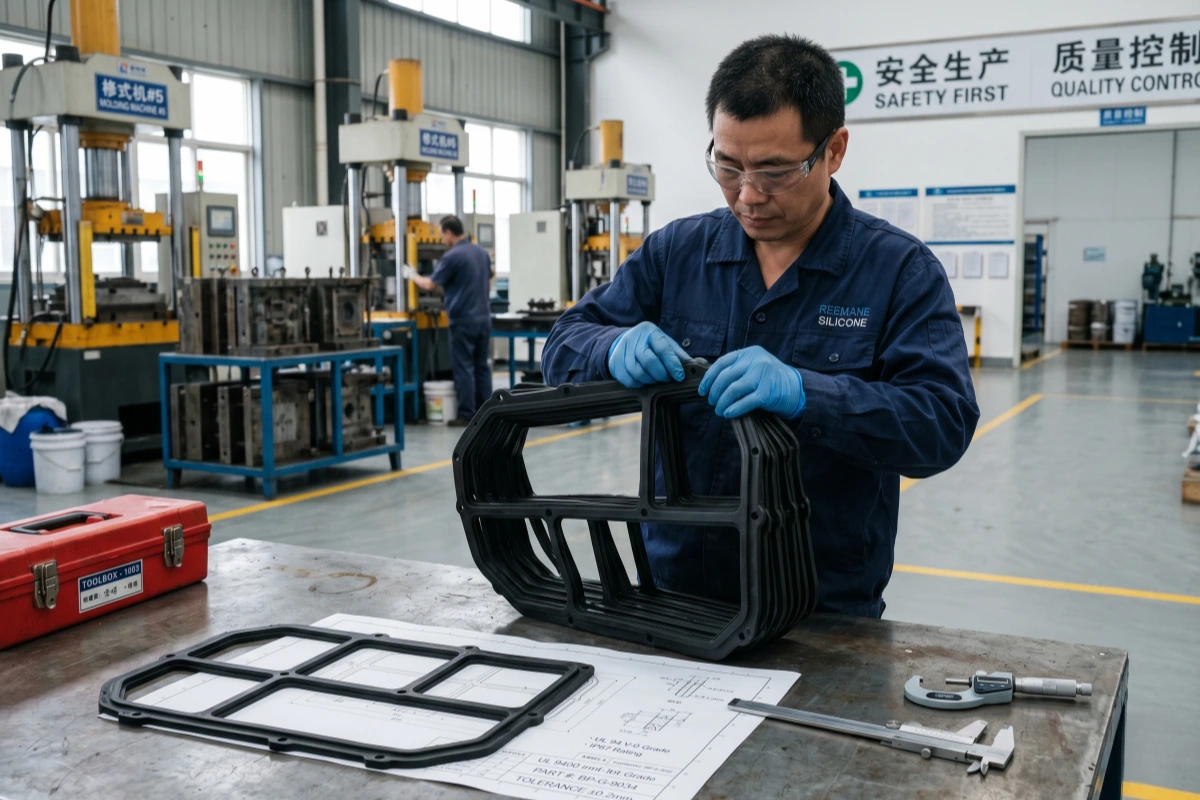
Safety is the non-negotiable priority in EV battery design. Standard silicone materials are not sufficient. For battery pack gaskets and module seals, UL 94 V-0 rated silicone is essential. This ensures that in the event of thermal runaway, the silicone components do not contribute to the spread of fire and possess self-extinguishing properties.
2. Shore A Hardness vs. Sealing Force
While a Shore A 40 gasket might feel “right,” the actual sealing effectiveness is determined by the Compression Load Deflection (CLD).
- Lower Hardness (Shore A 30-40): Ideal for compensating for large tolerance gaps in lightweight aluminum housings.
- Medium Hardness (Shore A 50-70): Necessary for high-pressure environments where anti-extrusion properties are required.
Our engineering team provides DFM (Design for Manufacturing) analysis to ensure the selected hardness matches your housing’s bolt torque and rigidity.
3. Managing Compression Set for 10+ Year Lifespan
EV batteries are expected to last over a decade. Traditional elastomers may lose their “bounce” (resilience) over time, leading to leaks. Silicone’s superior low compression set—especially when post-cured correctly in our factory—ensures that the gasket maintains a constant sealing pressure even after years of thermal cycling (from -40°C to 150°C).
4. Chemical Compatibility with Coolants
Modern EV batteries often use liquid cooling systems. It is vital that internal silicone seals are compatible with ethylene glycol-based coolants. At Reemane, we verify material formulations to prevent swelling or degradation that could lead to catastrophic coolant leaks within the battery modules.
Conclusion: Partnering for Technical Excellence
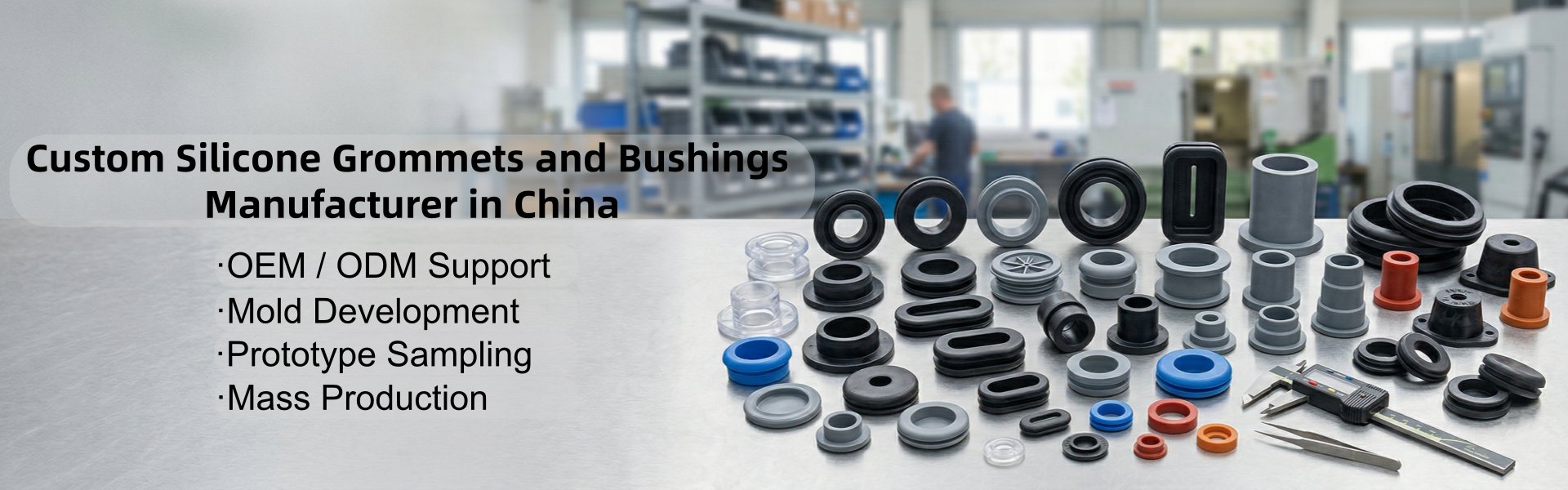
Custom silicone manufacturing for the EV sector is not just about molding a shape; it’s about engineering a safety barrier. Whether you are designing a Battery Pack Gasket, Cable Grommet, or Charging Port Cover, Reemane provides the technical backing to turn your drawings into reliable, high-performance realities.